19 November 20268 min read
What Is an Ācārya (Acharya)? The Title Explained, and Where You Can Earn It
What the Buddhist and Sanskrit title Acharya means across traditions, where you can earn an Acharya degree today, and how it compares to an MA, Geshe or Khenpo.
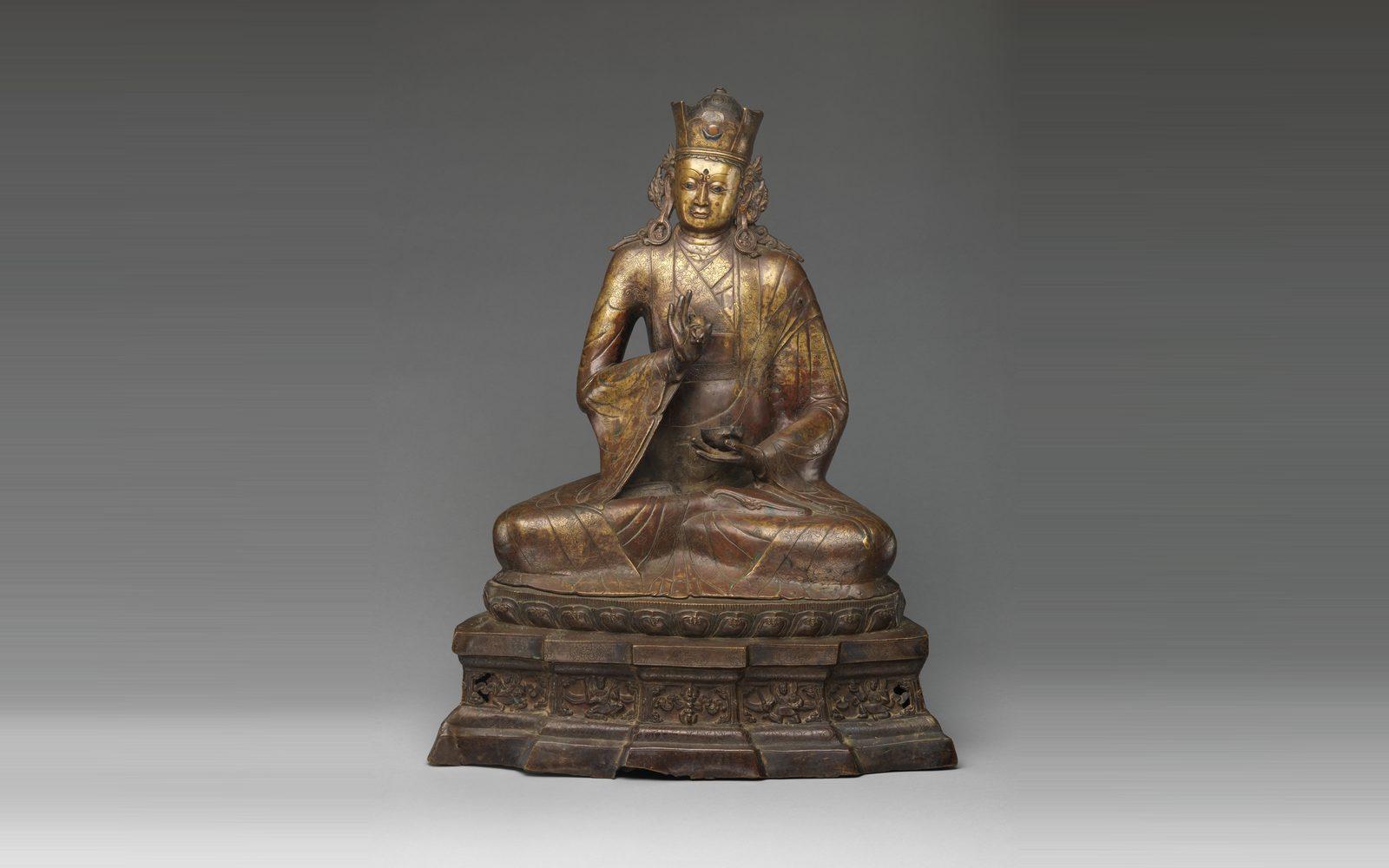
If you read the biographies of Tibetan teachers, Sanskrit scholars or Shambhala instructors, you'll often see a name preceded by "Acharya". Sometimes it marks a university degree, sometimes a monastic rank, and sometimes a senior teaching role within a community. It's the same word doing quite different jobs.
This guide explains what the title means, where it's used, and the main routes to earning it today.
Checked November 2026. Sources are linked in the text and listed at the end. Admission rules, prerequisites and language requirements change, and several institutions publish little in English. We've only listed details we could confirm on official pages or other reliable sources. Always check with the institution before you apply.
What the word means
Ācārya (आचार्य) is Sanskrit for "teacher" or "master", particularly a teacher who guides a student in conduct as well as learning. The Pali form is ācariya, and the Tibetan translation is lopön (slob dpon). In early Buddhist monastic law, the ācariya was one of the two key mentors of a new monk, alongside the preceptor (upajjhāya).
Over time the word picked up three broad modern uses:
- An academic degree — in India's Sanskrit and Tibetan university system, Acharya is the name of the postgraduate degree.
- A monastic or scholastic rank — in Tibetan shedras (monastic colleges) and in Burmese Pali examinations.
- A teaching title — given by a lineage holder to senior teachers in some (often Western) Buddhist communities.
If you want background on the languages involved, see our guide to the Buddhist languages.
1. The Acharya degree in India
India's traditional Sanskrit universities use their own names for degree levels: Shastri for the bachelor's degree and Acharya for the master's. You'll often see them written as "Shastri (BA)" and "Acharya (MA)".
Sanskrit universities
Sampurnanand Sanskrit Vishwavidyalaya in Varanasi is the best-known example. Its Acharya programmes are semester-based, and course listings describe a two-year postgraduate degree across many traditional subjects. Eligibility normally depends on a Shastri or a bachelor's degree with Sanskrit, but published versions of the minimum marks differ, so check the university's current eligibility page. The university has an international students section, but we couldn't confirm the terms for foreign applicants.
Equivalence with an MA is widely assumed in India, but formal recognition is decided by individual universities and employers. If you plan to use an Acharya for a job or further study, ask the receiving institution how it treats the degree.
Central University of Tibetan Studies, Sarnath
Founded in 1967 as a wing of Sampurnanand Sanskrit University, the Central Institute of Higher Tibetan Studies later became autonomous and is now a deemed-to-be university. It is also called the Central University of Tibetan Studies, though "CIHTS" remains in everyday use.
Its official Acharya curriculum framework describes the Acharya (M.A.) as two years over four semesters. There are streams in Buddhist Philosophy, Tibetan Language, Tibetan History and Culture, and Bhot Jyotish (Tibetan astrology), plus a Master of Fine Arts. Entry requires a Shastri with Tibetan language as a compulsory subject, in most streams from CIHTS itself. Teaching and exams are in Tibetan, Pali, Sanskrit, Hindi or English, depending on the subject. The degree includes oral recitation exams and a dissertation in the final semester.
In practice, that means the Acharya is designed for students who have already done the Shastri, usually after years of Tibetan-medium study. We couldn't find published rules for foreign applicants; contact the registrar.
Central Institute of Buddhist Studies, Leh
The Central Institute of Buddhist Studies in Ladakh is another deemed university with a similar structure. Course listings describe a two-year MA (Acharya) in Bhot Bauddh Darshan (Buddhist philosophy), open to holders of a three-year Shastri or equivalent with knowledge of Buddhist philosophy and the Bhoti language, with admission by entrance test and interview. These details come from third-party listings, so confirm them with the institute.
2. Lopön in Tibetan monastic colleges
In the Tibetan shedra system, lopön is both a teaching role and a scholastic rank. It's usually earned after many years of study and sits below khenpo, the title of a senior scholar who is qualified to lead a college.
- Institute of Buddhist Dialectics, Dharamsala — The IBD's programme runs about 16 years in total. After roughly ten years, students reach the Madhyamaka stage, which the institute counts as equivalent to an MA. Four more years lead to the Rime Lopön ("Great Master of Buddhist Philosophy", which it equates to an MPhil). A final tantra stage leads to the Rime Geshe or Geshema degree. Philosophy is taught only in Tibetan. Each intake has up to ten places for foreigners, and monastics are preferred over lay applicants. Short English-language courses are available for people who don't speak Tibetan.
- College for Higher Tibetan Studies, Sarah — A branch of IBD that offers a BA and master's programmes in Tibetan History, Literature and Linguistics, plus a one-year Tibetan language course for international students. Its own pages don't call these Acharya degrees.
- Dzongsar Khyentse Chökyi Lodrö Institute, Chauntra — According to the Khyentse Foundation, its intensive study programme lasts more than a decade (sources give between eleven and thirteen years), and the institute has produced around 160 khenpos and 1,100 lopöns. It has also opened higher Tibetan studies to lay and female students: its first eleven MA graduates in Tibetan literature received their certificates in 2022. At least one faculty profile lists an "Acharya" from Dzongsar, but we couldn't confirm which body awards that degree.
- Kagyu shedras — Some graduates of the Karma Shri Nalanda Institute at Rumtek, such as Dzogchen Ponlop Rinpoche, also hold an Acharya degree from Sampurnanand Sanskrit University. That's why many Kagyu teachers put "Acharya" before their names. Whether a particular shedra can award this today is a question for the shedra itself.
3. Ācariya and Dhammācariya in Theravāda
In Theravāda countries, ācariya (often ajahn in Thai) is still an everyday word for a teacher. Myanmar also has a formal title. Alongside the Pathamabyan examinations, the state and the Sangha run Dhammācariya ("Dhamma teacher") examinations in Pali and the scriptures. Candidates who pass are awarded Dhammācariya titles, and these are respected qualifications for monastic teachers. They are monastic examinations in Burmese and Pali, not a route for most foreign lay students. We couldn't confirm the current syllabus and rules in English.
4. Acharya as a community teaching title
In Shambhala, acharyas are senior teachers appointed by Sakyong Mipham Rinpoche as his representatives, empowered to give refuge and bodhisattva vows. The role isn't something you apply for. It has also been in flux since 2018: some acharyas retired or resigned in 2020, and in 2022 the Shambhala organisation became self-governing, with the Sakyong no longer involved in its governance. Check how a given community uses the title now.
Other Western sanghas use the word too. Nalandabodhi, for example, lists Acharyas alongside Lamas and Mitras on its council of senior teachers. In these settings, Acharya marks trust and authorisation within a lineage. It isn't an academic qualification.
The main routes at a glance
| Route | Where | What you get | Good to know |
|---|---|---|---|
| Acharya (MA) in Sanskrit subjects | Sampurnanand Sanskrit Vishwavidyalaya, Varanasi | Postgraduate degree | Semester-based, generally described as two years. Shastri/BA with Sanskrit usually required. Check current eligibility and terms for foreign applicants. |
| Acharya (M.A.) in Buddhist Philosophy and other streams | Central University of Tibetan Studies, Sarnath | Postgraduate degree | Two years, four semesters. Requires a Shastri with Tibetan. Taught in Tibetan, Pali, Sanskrit, Hindi or English by subject. |
| MA (Acharya) in Bhot Bauddh Darshan | Central Institute of Buddhist Studies, Leh | Postgraduate degree | Two years. Requires Shastri or equivalent with Bhoti. Entrance test and interview. |
| Rime Lopön | Institute of Buddhist Dialectics, Dharamsala | Scholastic title (counted by IBD as MPhil level) | Reached after many years of Tibetan-medium study. Up to ten places for foreigners per intake, with monastics preferred. |
| Lopön / Khenpo | Dzongsar Institute, Chauntra, and other shedras | Monastic scholastic titles | Long residential programmes (more than a decade at Dzongsar). Mainly for monastics. |
| Dhammācariya | Myanmar state and Sangha examinations | Monastic teaching title | For monks studying in Burmese and Pali. |
| Acharya (teacher) | Shambhala, Nalandabodhi and others | Appointment by a lineage holder | Not something you apply for. |
How it compares to Western degrees, Geshe and Khenpo
- Acharya vs MA. An Indian Acharya is a recognised master's-level degree, but its content is very different. Instead of research methods and secondary literature, you'll do intensive text study, memorisation and traditional commentary. Western universities usually assess it case by case, so for PhD applications send a transcript and syllabus, and be ready to show strong English and academic writing.
- Acharya vs Geshe and Khenpo. Geshe (Gelug) and khenpo (Nyingma, Kagyu, Sakya) are senior scholastic titles, usually earned over a decade or more. They carry more weight in the tradition than an Acharya degree, though IBD, for example, counts its Geshe as equivalent to a PhD. Lopön generally sits below khenpo.
- For academic jobs. Universities hiring in Buddhist Studies generally expect a PhD. An Acharya, lopön or geshe can be a real asset, especially for language teaching, translation and work with Tibetan texts. It usually works best alongside a Western research degree. Our comparison of traditional and academic Buddhist Studies goes into this in more detail. If you're ready to apply for an MA, see where to apply for an MA in Buddhist Studies.
Sources and further reading
Besides the pages linked in the text:
- Georges B. J. Dreyfus, The Sound of Two Hands Clapping: The Education of a Tibetan Buddhist Monk (University of California Press, 2003), on the Tibetan scholastic curriculum, titles and examinations.
- "Myanmar Sangha Administration of Pali Studies in the 21st Century", Journal of the International Buddhist Studies College: the Dhammācariya and Tipiṭaka selection examinations today.
- Traditional study vs academic Buddhist Studies: our guide to the shedra, the Pali examination systems and the university, with its own sources.
Find current openings
Translation projects, shedras, dharma centres and universities regularly advertise roles that value traditional training. Browse current Tibetan Studies jobs, or see upcoming courses and talks on our events page.
Subscribe below to get new openings by email.