13 November 202610 min read
The Buddhist Languages: Sanskrit, Pali, Tibetan, Chinese, Japanese and Which One to Learn
What each Buddhist scriptural language gives you access to, how hard it is to start, typical timelines, and how to choose the right one for your goals.
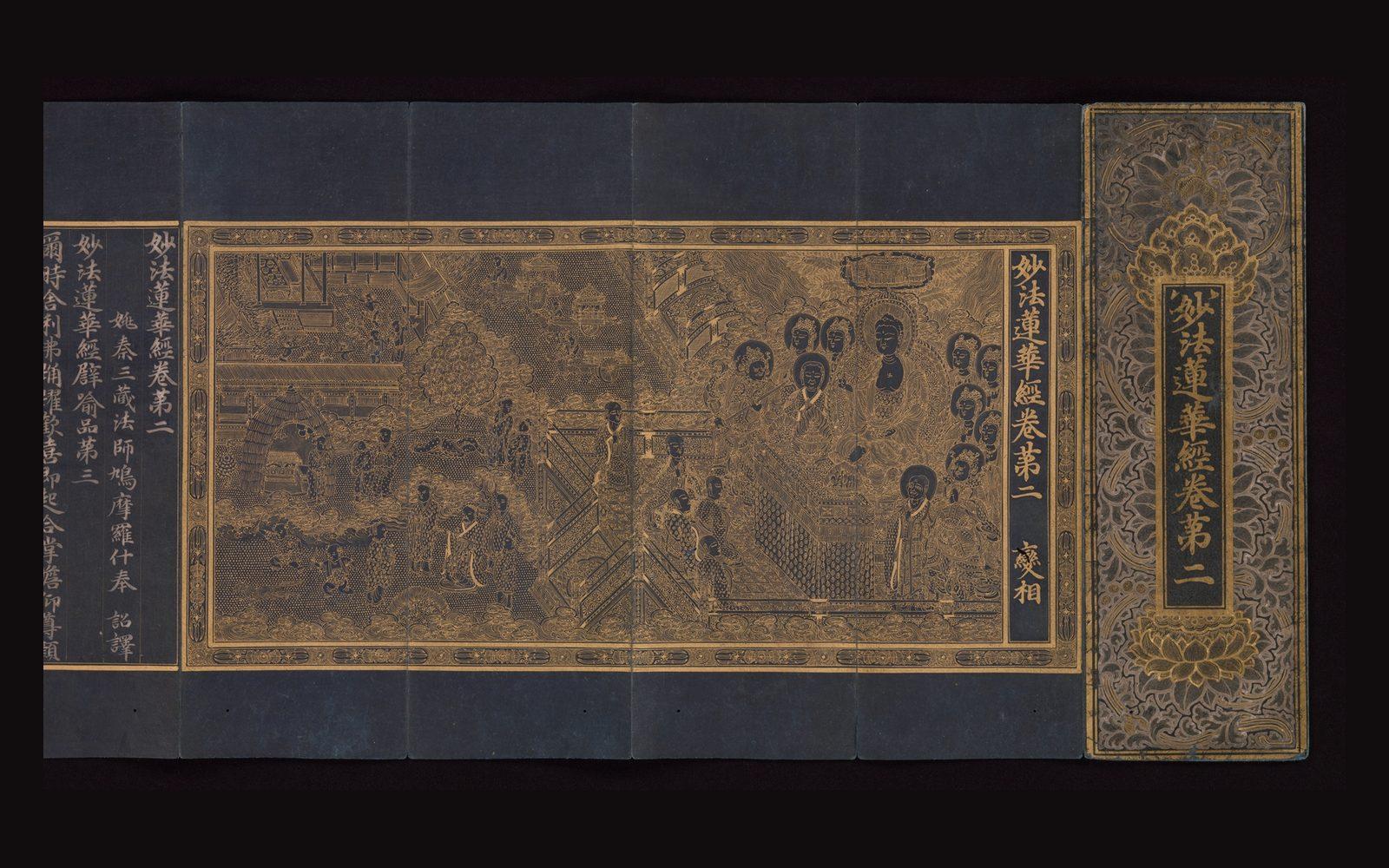
Buddhism has never had a single sacred language. From early on, the teachings were carried in whatever language people spoke, and then translated, again and again, as they moved across Asia. So "learning a Buddhist language" can mean many different things. It might mean Pali for the Theravāda suttas, Sanskrit for Indian Mahāyāna philosophy, Classical Tibetan for the Kangyur and its commentaries, or Buddhist Chinese for the canon that shaped Chan, Zen and Pure Land.
This guide explains what each language is, which texts and traditions it opens up, how hard it is to start, and how to choose. If you already know which language you want and need a course, our separate guide to summer schools and online courses covers where to study.
Checked November 2026. Sources are linked in the text, and a reading list for each language is at the end. Timelines below are rough guides based on typical university courses, not promises. Everyone learns at a different pace, and a lot depends on how many hours a week you can give.
Pali
What it is. Pali is a Middle Indo-Aryan language, a close relative of Sanskrit but simpler in its sounds and grammar. The Theravāda tradition holds that it is the language the Buddha spoke. Scholars generally see it instead as a literary language that grew out of early spoken dialects.
What it opens up. The Pali Canon, or Tipiṭaka ("three baskets"): the Vinaya (monastic discipline), the Sutta Piṭaka (the discourses) and the Abhidhamma. Tradition says the canon was first written down in Sri Lanka in the first century BCE, under King Vaṭṭagāmaṇi; the Sri Lankan chronicle Mahāvaṃsa (33.100–101) tells how the monks, who had passed it down orally, "wrote them down in books". Around it sit commentaries, including Buddhaghosa's, chronicles and later manuals. Pali is still chanted every day in Sri Lanka, Myanmar, Thailand, Laos and Cambodia, and it has no single script of its own. It is written in Sinhala, Burmese, Thai and Khmer scripts, and in roman letters by most Western learners.
How hard to start. One of the gentlest classical languages. If you know any Latin or Greek, the grammar of cases and verb endings will feel familiar. Many learners read simple suttas with a dictionary after a few months of steady work, and manage most canonical prose after a year or two.
Sanskrit
What it is. The classical learned language of ancient India, used by Hindus, Jains and Buddhists alike. Indian Buddhists increasingly adopted it from around the turn of the Common Era, and much later Indian Buddhist literature was written in it.
What it opens up. The surviving Indian Mahāyāna sūtras (the Lotus, the Perfection of Wisdom literature, the Laṅkāvatāra), the philosophical treatises or śāstras of Nāgārjuna, Asaṅga, Vasubandhu, Dharmakīrti and Śāntideva, poetry such as Aśvaghoṣa's life of the Buddha, and the tantras. Many sūtras are written in what the scholar Franklin Edgerton called Buddhist Hybrid Sanskrit, described in his Buddhist Hybrid Sanskrit Grammar and Dictionary (Yale, 1953), a mix of Sanskrit and Middle Indic forms. It breaks the rules of the classical grammars, so it needs its own reference works. Much survives only in fragments, in later manuscripts from Nepal and Tibet, or in Tibetan and Chinese translation.
How hard to start. Demanding. The Devanāgarī script takes a week or two. The grammar takes much longer: rich inflection, sound changes where words meet (sandhi) and very long compounds. Expect a year of serious study to cover the basic grammar, and two or three years before you read philosophical prose with confidence. The reward is that Sanskrit makes Pali much easier, and it explains a great deal about the Tibetan and Chinese translations.
Gāndhārī
What it is. A Middle Indic language from the ancient region of Gandhāra, in today's north-western Pakistan and eastern Afghanistan, written in the Kharoṣṭhī script.
What it opens up. The oldest Buddhist manuscripts known. Birch-bark scrolls in Gāndhārī began to change the field from the 1990s, when the British Library acquired a collection in 1994. Richard Salomon's study of it, Ancient Buddhist Scrolls from Gandhāra (1999), dates the scrolls to around the first century CE. Later finds include early sūtras, verses and commentaries. This is a specialist area, and nearly everyone comes to it after Sanskrit or Pali. Gandhari.org is the place to start.
Classical Tibetan
What it is. The written language of Tibet, with a script that tradition traces to the seventh century. In the early ninth century the Tibetan court standardised Buddhist translation vocabulary, recorded in the Sanskrit–Tibetan glossary known as the Mahāvyutpatti (see Ishihama and Fukuda's critical edition, Toyo Bunko, 1989). That is why Tibetan translations of Indian texts are famously consistent and often close to word for word.
What it opens up. Two great collections. The Kangyur holds texts held to be the word of the Buddha (sūtras, Vinaya, tantras), in roughly a hundred volumes depending on the edition. The Tengyur holds translated Indian commentaries and treatises, in over two hundred. Together they preserve the largest surviving body of Indian Buddhist literature, much of it lost in Sanskrit. Beyond them lies more than a thousand years of Tibetan writing: philosophy, biography, ritual, poetry and the practice texts used every day in Nyingma, Kagyu, Sakya, Gelug and Bön communities. The 84000 project is translating the Kangyur and Tengyur into English.
How hard to start. The script and spelling are the first hurdle, because Tibetan words are written with letters that are no longer pronounced. Once those are learned, the basic grammar is fairly compact, and many students read simple texts within a year. Philosophical and tantric material is another matter, because so much meaning sits in technical vocabulary. Most people reckon on two to four years to read independently. Classical and modern spoken Tibetan differ a lot, so if you want to talk with teachers or do fieldwork, plan to learn colloquial Tibetan as well.
Classical and Buddhist Chinese
What it is. Literary Chinese, the written language used across East Asia for two thousand years. Buddhist texts were translated into Chinese from the second century CE onward. Famous translators include Kumārajīva in the early fifth century and Xuanzang in the seventh. Buddhist Chinese has its own vocabulary, transliterations of Indian terms and grammatical habits taken from the spoken language of its time, so it differs noticeably from Confucian classics.
What it opens up. The largest Buddhist canon of all. Today scholars usually cite the Taishō canon (Taishō shinshū daizōkyō), edited in Japan between 1924 and 1934, which is free and searchable through CBETA. It preserves early āgama sūtras that parallel the Pali Nikāyas, several complete Vinayas, Abhidharma works lost in India, and the foundations of East Asian schools: Tiantai, Huayan, Chan, Pure Land and others.
How hard to start. Thousands of characters, no alphabet and no inflection: meaning depends on word order and context. Expect about two years before reading Buddhist prose with a dictionary. Knowing modern Chinese or Japanese helps a lot with characters, but it is not the same as reading classical texts.
Japanese
What it opens up. Japanese Buddhism comes in two layers. Much premodern Japanese Buddhist writing is in kanbun, Chinese texts read in Japanese word order with small reading marks (kundoku; see Whitman, "The Ubiquity of the Gloss", 2011). Kūkai, Saichō and Hōnen wrote largely in this form. Other key works are in classical Japanese, such as Dōgen's Shōbōgenzō and the letters of Shinran and Rennyo. On top of this comes the modern Japanese scholarship that leads much of the field. Many Japanese Buddhist Studies scholars publish only in Japanese, so modern Japanese is often essential even if your sources are in Sanskrit or Chinese.
How hard to start. Modern Japanese takes most English speakers several years to read academic prose well. Classical Japanese and kanbun are usually added on top of it.
The wider family, briefly
- Korean. Most premodern Korean Buddhist writing, from Wŏnhyo to Chinul, is in literary Chinese. The Haeinsa woodblocks of the thirteenth-century Tripitaka Koreana, more than 80,000 of them, are among the most important editions of the Chinese canon. Modern Korean matters for fieldwork and for Korean scholarship.
- Mongolian. The Kangyur was translated into Mongolian in 1628–29, under Ligdan Khan, and the Tengyur in 1742–49, under the Qianlong emperor. Mongolian matters for the history of Tibetan Buddhism in Inner Asia and for today's revival in Mongolia, Buryatia and Kalmykia.
- Tangut. The language of the Xixia state (eleventh to thirteenth centuries), which produced its own Buddhist canon. Most surviving texts came from Khara-Khoto and are held in St Petersburg. It is a small, specialist field.
- Khotanese and Sogdian. Middle Iranian languages of the Silk Road, with Buddhist manuscripts found at Dunhuang and in the Tarim Basin. Khotanese preserves the Book of Zambasta, a long Buddhist poem. These, along with Tocharian and Old Uyghur, are mostly for specialists in Central Asian Buddhism.
Modern spoken languages
If you plan anthropological or ethnographic work, the spoken language of the community matters as much as any classical one. That might be Sinhala, Thai, Burmese, Khmer or Lao in Theravāda countries, modern Tibetan or Nepali in the Himalaya, or Mandarin, Japanese, Korean or Vietnamese in East Asia.
At a glance
| Language | Main traditions | Key corpus | Getting started | Rough time to read with a dictionary |
|---|---|---|---|---|
| Pali | Theravāda | Pali Canon and commentaries | Gentle; regular grammar | 6–18 months |
| Sanskrit | Indian Mahāyāna, tantra, philosophy | Sūtras, śāstras, tantras (incl. Buddhist Hybrid Sanskrit) | Hard; complex grammar | 2–3 years |
| Gāndhārī | Early Indian Buddhism | Gandhāran manuscripts | Specialist; learn after Sanskrit or Pali | After Sanskrit/Pali |
| Classical Tibetan | Tibetan and Himalayan Buddhism, Bön | Kangyur, Tengyur, Tibetan authors | Tricky spelling, compact grammar | 1–3 years |
| Buddhist Chinese | Chinese, Korean, Japanese, Vietnamese Buddhism | Taishō canon | Slow start with characters | About 2 years |
| Japanese (incl. kanbun) | Japanese Buddhism | Kanbun works, classical Japanese, modern scholarship | Long road; several layers | 3+ years |
How to choose
If you're heading for an academic career, let your research question decide. Early Buddhism points to Pali, often with Sanskrit and Chinese āgama parallels. Indian philosophy usually means Sanskrit plus Tibetan, because so much survives only in translation. East Asian Buddhism means Classical Chinese and modern Japanese. Most graduate programmes expect at least one source language, and serious PhD work often needs two plus a modern research language such as Japanese, French or German. Starting in your BA is a huge help: see our guides to studying Buddhist Studies as an undergraduate, applying for an MA and funding a PhD.
If you practise in a tradition, the obvious choice is usually the right one. That means Pali for Theravāda and Insight communities, Tibetan for Vajrayāna sanghas, and Chinese or Japanese for Chan, Zen, Pure Land and Nichiren practice. Even a year of study changes how you hear chants and teachings.
If you want to translate, go deep in one source language before adding another, and keep working on your English. Tibetan translation in particular has a lively professional scene, with projects that hire translators and editors. Our Tibetan Studies jobs page lists them as they come up.
If you're doing fieldwork, put the modern spoken language first and add a classical language for the texts your community uses.
If you simply can't decide, Pali and Sanskrit are good first languages. They teach you how Indian Buddhist terms work, and that knowledge carries over into every later language you learn.
Sources and further reading
General references:
- Robert E. Buswell Jr. and Donald S. Lopez Jr., The Princeton Dictionary of Buddhism (Princeton University Press, 2014): entries on each canon, language and translator mentioned here.
- Charles Muller, Digital Dictionary of Buddhism, the standard online dictionary for Buddhist Chinese terms.
Cited in the text:
- The Mahāvaṃsa, or the Great Chronicle of Ceylon, translated by Wilhelm Geiger with Mabel Haynes Bode (Pali Text Society, 1912), chapter 33. Online at archive.org.
- Richard Salomon, Ancient Buddhist Scrolls from Gandhāra: The British Library Kharoṣṭhī Fragments (British Library and University of Washington Press, 1999).
- Yumiko Ishihama and Yoichi Fukuda, A New Critical Edition of the Mahāvyutpatti (Toyo Bunko, 1989).
- John Whitman, "The Ubiquity of the Gloss", Scripta 3 (2011): 95–121.
- E. I. Kychanov, "The Tangut Collection of the Institute of Oriental Manuscripts: History and Study" (2008).
- R. E. Emmerick, The Book of Zambasta: A Khotanese Poem on Buddhism (Oxford University Press, 1968).
To start each language:
- Pali: Steven Collins, A Pali Grammar for Students (Silkworm Books, 2006); A. K. Warder, Introduction to Pali (Pali Text Society, 1963).
- Buddhist Hybrid Sanskrit: Franklin Edgerton, Buddhist Hybrid Sanskrit Grammar and Dictionary (Yale University Press, 1953).
- Gāndhārī: Richard Salomon, The Buddhist Literature of Ancient Gandhāra (Wisdom Publications, 2018), and Gandhari.org.
- Classical Tibetan: Joe B. Wilson, Translating Buddhism from Tibetan (Snow Lion, 1992).
- Buddhist Chinese: the CBETA online canon, searchable alongside the dictionary above.
Find current openings
Language skills open doors to translation projects, research posts and teaching roles. Browse our Tibetan Studies jobs and other listings, and check our events and summer schools for upcoming language intensives.
Subscribe below to get new openings by email.